If you experience ongoing pain near your ears, jaw, or the muscles along the sides of your face, you may be dealing with a temporomandibular disorder, commonly referred to as TMD. Symptoms can include jaw discomfort, clicking or popping sounds, stiffness, or difficulty opening and closing your mouth.
Many people mistakenly use the term TMJ to describe these problems. TMJ actually refers to the temporomandibular joint, the hinge that connects your lower jaw to your skull. You have two TMJs, one on each side. TMD is the term used to describe disorders affecting the joint, the surrounding muscles, or both.
What Is TMD and Why Does It Cause Jaw Pain?
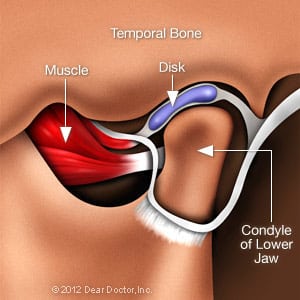
TMD is a group of conditions involving pain, inflammation, or dysfunction of the jaw joint and surrounding muscles. The jaw joint is complex and allows movement in multiple directions. A cushioning disc sits between the jawbone and skull, and several large muscles work together to control movement.
Problems can develop in the joint itself, the disc, or the muscles that control jaw motion. Because there are multiple structures involved, identifying the exact cause of TMD symptoms can take a careful examination.
The good news is that most cases of TMD improve with conservative, non-invasive treatments, and surgery is rarely necessary.
What Are the Common Signs and Symptoms of TMD?
Clicking Sounds — Some people with TMD hear a clicking, popping, or grating sound coming from the TMJ when opening or closing the mouth. This is usually caused by a shifting of the disk inside the joint. Someone standing next to you might even be able to hear it. Clicking by itself is actually not a significant symptom because one-third of all people have jaw joints that click, studies show. However, if the clicking is accompanied by pain or limited jaw function — the jaw getting “stuck” in an open or closed position, for example — this would indicate TMD. Kids’ mouth anatomy.
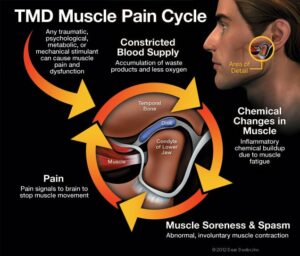
Muscle Pain — This can be felt in the cheeks (masseter muscles) and temples (temporalis muscles), where the two big pairs of jaw-closing muscles are located. If you feel soreness and stiffness upon waking up in the morning, it’s often related to habits such as clenching and/or grinding the teeth at night. If you have this type of nocturnal habit, we can have a nightguard custom-made for you that should be very helpful in decreasing the force applied to your teeth, which will, in turn, allow your muscles to relax and relieve pressure on your jaw joints. Other self-care remedies are discussed below (please see Relieving the Pain).
Joint Pain — Pain that’s actually coming from one or both jaw joints technically would be described as arthritis (“arth” – joint; “itis” – inflammation) of the TMJ. When we look at radiographs (x-ray pictures) we find that some people have arthritic-looking TMJs but no symptoms of pain or dysfunction; others have significant symptoms of pain and dysfunction but their joints look normal on radiographs. There is no cure for arthritis anywhere in the body, but medication can sometimes help relieve arthritic symptoms.
How Is TMD Diagnosed?
If you are experiencing jaw pain or difficulty with movement, we will perform a thorough examination to identify the source of the problem. This may include evaluating your bite, jaw motion, muscle tenderness, and reviewing imaging if needed. Understanding whether the issue is muscular, joint-related, or both helps guide the most effective treatment plan.
How Can TMD Pain Be Relieved?
Most TMD cases respond well to simple, reversible treatments. Depending on your symptoms, recommendations may include:
Eating a softer diet to reduce strain on the jaw
Applying ice or moist heat to relieve soreness and inflammation
Gentle stretching and jaw exercises to ease muscle tension
Anti-inflammatory medications or muscle relaxants when appropriate
For patients who clench or grind their teeth, a custom-made nightguard can significantly reduce stress on the jaw and allow the muscles to relax.
Are There Other Treatment Options for Severe TMD?
More advanced treatments are reserved for persistent or severe cases. These may include orthodontic treatment, dental restorations, or minor joint procedures such as injections or lavage. Major surgery is rarely required and is only considered after all conservative options have been fully explored.
When Should I Seek Treatment for TMJ or TMD Symptoms?
If you are experiencing ongoing jaw pain, stiffness, or difficulty opening and closing your mouth, it is important to schedule an evaluation. Early diagnosis and conservative care can prevent symptoms from worsening and help you return to comfortable jaw function.
We are committed to helping you find relief. If you are experiencing TMD symptoms, please contact our office to schedule an examination and begin appropriate care.