
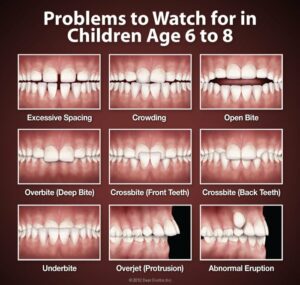
When it comes to your child’s smile, timing matters. At Minahan Orthodontics, we follow the American Association of Orthodontists’ recommendation that children receive their first orthodontic evaluation by age 7. At this stage, a mix of baby and permanent teeth allows Dr. Lara Minahan to identify developing concerns early and determine whether treatment is needed now or simply monitored over time.
Early orthodontic care does not always mean braces right away. In many cases, careful observation helps ensure treatment begins at the most effective time for long-term results.
Why Should My Child See an Orthodontist Early?
An early orthodontic evaluation helps detect subtle issues before they become more complex. By evaluating growth and development early, we can guide teeth and jaws into healthier positions and reduce the risk of future complications.
Early evaluations may help:
- Identify crowding or spacing concerns early
- Detect bite issues such as crossbites or underbites
- Reduce the risk of injury to protruding front teeth
- Support proper jaw growth and facial balance
- Create space for permanent teeth to erupt correctly
Early orthodontics focuses on prevention and guidance, often simplifying or shortening future treatment.
What Happens During an Early Orthodontic Evaluation?
During your child’s visit, Dr. Minahan will:
- Review dental and medical history
- Examine tooth alignment, bite, and jaw development
- Take digital X-rays or photos if needed
- Discuss whether early treatment, monitoring, or no treatment is recommended
You will leave with a clear understanding of your child’s orthodontic needs and the best timing for care.
When Is Early Orthodontic Treatment Recommended?
While most orthodontic treatment begins between ages 9 and 14, some conditions respond best when treated earlier during active growth. Early intervention may be recommended for concerns such as:
Crossbite
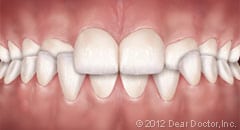 One is severe crossbite, a condition where the upper teeth close inside the lower teeth. To treat this problem, a device called a palatal expander can be used, which gradually and painlessly widens the upper jaw; it’s especially effective when the jaw itself hasn’t fully developed. If we wait too long, a more complicated treatment, or even oral surgery, might be required to correct the problem.
Crowding
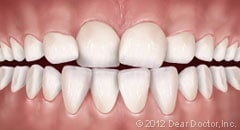 Another condition that may benefit from early treatment is severe crowding. This occurs when the jaws are too small to accommodate all of the permanent teeth. Either palatal expansion or tooth extraction may be recommended at this point to help the adult teeth erupt (emerge from below the gums) properly. Even if full braces are recommended at a later date when all permanent teeth erupt, the treatment is likely to be less complicated.
Protruding Teeth
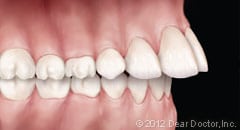 Early intervention may also be helpful in resolving several other problems. Protruding teeth, especially in front, can be prone to chipping and fractures; they may also lead to problems with a child’s self-image. A severe underbite, caused by the lower jaw growing much larger than the upper jaw, can result in serious bite problems. Orthodontic appliances, including braces and headgear, can be successfully used to correct these problems at this stage, when the child’s development is in full swing, thereby increasing the chances that surgery can be avoided.
Palatal Expanders
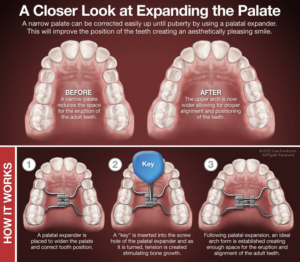
An expander is custom-made for each individual and fits over several top teeth in the back of the mouth. The appliance has two halves that are connected in the middle with a screw. To activate the device, you simply turn the screw a very small amount each day with a special key.
This induces tension at the junction of the two palatal bones, causing them to gradually move apart. Once the desired expansion is achieved, we will leave the appliance in for a few more months to allow new bone to form in the gap and stabilize the expansion. Generally, expanders are worn for 3 to 6 months altogether.
Correcting Bad Habits
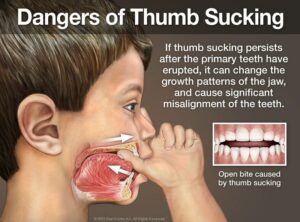
Certain habits can affect how the teeth and jaws develop if they persist beyond early childhood. These may include:
- Thumb or finger sucking
- Tongue thrusting
- Chronic mouth breathing
Early orthodontic care can help reduce the impact of these habits and support healthier oral development.
Does Every Child Need Early Orthodontic Treatment?
No. Many children benefit most from treatment once most or all permanent teeth have erupted. If early treatment is not necessary, your child may be placed in an orthodontic monitoring program. This allows us to track growth, tooth eruption, and bite changes over time and recommend treatment at the ideal moment.
Will Early Treatment Eliminate the Need for Braces Later?
Early treatment can reduce the severity of future orthodontic issues, but it does not always eliminate the need for braces or aligners later. In many cases, early care makes later treatment shorter, simpler, and more predictable. Every child’s growth pattern is unique, which is why personalized evaluation and monitoring are essential.
Benefits of Early Orthodontic Care
Early orthodontic treatment can:
- Improve bite function and chewing efficiency
- Make teeth easier to clean and maintain
- Reduce uneven tooth wear over time
- Support balanced jaw and facial development
- Boost confidence during key developmental years
These benefits help protect your child’s oral health well into adulthood.
Should My Child Continue Seeing Their Dentist?
Yes. Regular dental checkups every six months remain essential during orthodontic monitoring or treatment. Routine cleanings and exams help maintain healthy teeth and gums while orthodontic care is underway.
